




What Is High Pressure Die Casting?
How It Works
High pressure die casting, commonly abbreviated as HPDC, is a metal forming process that forces molten non-ferrous alloy - typically aluminum, zinc, or magnesium - into a reusable steel die at pressures between 1,500 and 25,000 PSI. The cavity fills in under 100 milliseconds, and the part solidifies under sustained clamping force. It's the fastest way to mass-produce complex, dimensionally accurate metal components, and it accounts for roughly half of all light-alloy casting output worldwide.
High pressure die casting (HPDC) is a manufacturing process where molten metal gets forced into a mold cavity under significant hydraulic pressure. The metal fills the die at high velocity and gets held there by a heavy-duty press until solidification is complete. Once the casting has cooled, the die opens and the part gets ejected. The die then closes again for the next cycle. The tooling itself consists of two hardened steel blocks that form the cavity geometry when clamped together.
HPDC stands for High Pressure Die Casting. The abbreviation shows up everywhere in automotive and electronics sourcing specs. In technical documentation you'll also see it referred to as PDC (pressure die casting), though PDC technically encompasses both high and low pressure variants. When a buyer's RFQ says "HPDC process required," they're specifying that the parts must be produced on a high-speed injection machine with rapid solidification under pressure, as opposed to gravity or low-pressure methods.

Origins of the Process
Die casting first showed up in the mid-1800s in the printing industry. Printers would pour molten lead-tin alloy into steel molds to produce type for printing presses. From there, the technology spread to other manufacturing sectors pretty quickly. In 1914, the process started incorporating zinc and aluminum alloys-materials that still dominate the industry today. Interestingly enough, most of the alloys we use now were already developed by the mid-1930s.
Materials Used in HPDC
The alloy you select affects everything from flow behavior to final part strength, and not all materials perform the same way under rapid injection conditions.
Aluminum is the most widely cast metal in this process. Alloys like A380, ADC12, and A360 each serve different roles. A380 is the workhorse for general-purpose aluminium hpdc casting - good fluidity, pressure tightness, and corrosion resistance at a reasonable cost. ADC12 sees heavy use in Asian foundries for consumer electronics housings and automotive brackets. A360 offers better elongation and is often specified where impact resistance matters more than castability.
Aluminum is the dominant material in high pressure die casting, accounting for the majority of global HPDC output by tonnage. The most common aluminium high pressure die casting alloys include A380 (general-purpose, widely available), ADC12 (prevalent in Asian foundries, slightly different Si-Cu balance), A360 (better corrosion resistance and ductility), and AlSi9Cu3 for European automotive applications. Alloy choice affects everything from die life to surface finish quality. Parts cast in aluminum HPDC typically achieve tensile strengths of 220–330 MPa in the as-cast condition, with elongation between 1% and 3.5% - adequate for most structural and housing applications but not sufficient for safety-critical suspension parts, which usually go to LPDC or gravity casting.
Zinc alloys (Zamak 3, Zamak 5) run exclusively through hot chamber machines and produce the tightest tolerances of any die cast metal. They're common in hardware, electrical connectors, and decorative trim. Magnesium alloys like AZ91D give you the lowest density of any structural casting material, which is why high pressure aluminum die casting and magnesium HPDC are both gaining ground in EV powertrain programs where every gram counts.
When sourcing pdc aluminium casting for a new project, it's worth discussing alloy selection early with your foundry. The choice between a silicon-heavy alloy (better flow, lower shrinkage) and a copper-bearing alloy (better machinability, higher strength) often drives the entire tooling and gating strategy.
Process Breakdown
A typical HPDC cycle involves four main steps: die prep, injection, ejection, and trimming. Depending on what you're making, there are variations like vacuum die casting, slow-fill techniques, or semi-solid metal processing. Here's how the standard process runs:
Die Preparation
Before each cycle, operators clean out the die and spray it with release agent. The release agent does double duty-it helps control die temperature and keeps the casting from sticking when it's time to eject.
Getting the thermal profile right before each shot is more involved than it sounds. Most production cells use a combination of internal cooling channels and external high pressure die cooler circuits to pull heat out of heavy sections while keeping thin features warm enough for proper fill. The aluminum die casting mold release agent itself has evolved significantly - modern water-based formulations are dosed by automated spray heads that adjust coverage based on thermocouple readings embedded in the die. Over-spray wastes material and can cause gas defects; under-spray leads to soldering where aluminum bonds to the die steel. Foundries running tight process windows typically audit their high pressure die casting mould surface condition every few thousand shots to catch erosion or heat checking before it shows up in parts.
Metal Injection
There are two ways to get molten metal into the die:
Hot chamber machines work well for lower melting point metals like zinc, magnesium, and lead. The injection mechanism stays submerged in the molten metal bath. A plunger pushes metal through a gooseneck and into the die-the whole system runs hot.
Cold chamber machines handle higher melting point materials like aluminum and brass. Metal gets ladled or poured into a separate shot sleeve, then a hydraulic ram drives it into the die. You can set these up horizontally or vertically. Magnesium can go either way, though hot chamber tends to work better for smaller, intricate parts since cold chamber machines have size constraints.
Injection pressures typically run anywhere from 1,500 to 25,000 PSI, and the fill happens in a fraction of a second. The die has to stay locked tight under pressure during solidification-this compresses any trapped gases and compensates for shrinkage as the metal cools. Modern machines can deliver up to 4,000 tons of clamping force to hold everything together.
In practice, the hpdc machine process runs through three distinct plunger phases rather than a single push. The first phase - slow shot - moves metal through the sleeve at around 0.2–0.5 m/s to minimize turbulence before the gate. The second phase ramps up to 2–6 m/s for cavity fill, and the total fill window on a well-tuned machine lands between 20 and 100 milliseconds depending on part volume. The third phase is intensification, where the system applies a final pressure spike (often exceeding 1,000 bar) to compress trapped gas pockets and feed shrinkage as the casting solidifies. Operators dial in these high pressure die casting process parameters through iterative simulation and trial shots. Getting the transition points wrong - too fast in phase one and you entrain air, too slow in phase two and you risk cold shuts. The acceptable high pressure die casting pressure range for a given part depends on alloy, wall thickness, and gating geometry, but most production setups fall between 700 and 1,200 bar at the gate during fill.
Ejection and Trimming
Once the metal has fully solidified, ejector pins push the casting out of the cavity. These pins are usually built into the moving half of the die and positioned to avoid damaging the part. The final step is trimming off the gates, runners, and any flash. This gets done with trim dies or saws. Scrap material typically goes right back into the furnace for the next batch.
For many applications, trimming is where the process ends - the parts go straight to assembly or packaging. But when tighter tolerances or sealing surfaces are required, secondary CNC operations bring dimensions into spec. Fully machined high pressure diecastings are routine in powertrain and hydraulic valve body programs where bore concentricity and surface roughness need to meet single-digit micron requirements. Surface treatments like anodizing, powder coating, chromate conversion, and e-coating get applied depending on the end-use environment. One thing worth noting: because HPDC parts contain subsurface porosity, aggressive machining that removes too much of the dense skin layer can expose voids. Part designers working on high precision die casting programs account for this by calling out machining stock in critical areas only and leaving as-cast surfaces wherever functional requirements allow.

Why HPDC Gets Used
Compared to other casting methods, high pressure die casting brings some real advantages to the table:
Production rates blow past low pressure or gravity casting. The high-speed injection means you can crank out parts fast, which is why HPDC dominates high-volume manufacturing.
Dimensional accuracy and surface finish come out excellent. Many parts go straight to assembly with no secondary machining, saving both time and money. The smooth surface also takes plating well. Plus, you get consistent microstructure and solid mechanical properties throughout the part.
Wall sections can get incredibly thin-down to 0.40mm or less in some cases. That's thinner than what's practical with other casting processes. Thin walls cut weight and allow you to cast in threaded inserts, bushings, and other hardware during the pour, reducing downstream assembly operations.
Tooling flexibility means you can cast complex geometries in one shot. And die casting dies last a long time, so the tooling cost gets amortized over a huge number of parts, bringing unit costs down.

Limitations and Trade-offs
No process covers every scenario, and die casting under high pressure is no exception.
Porosity is the most commonly cited drawback. The violent, high-velocity fill that makes this a high pressure casting process also entrains air and generates gas pockets inside the part. Vacuum-assisted variants reduce this substantially, but they add cost and cycle time. Because of residual porosity, standard HPDC parts generally cannot be heat treated - the internal gas expands at elevated temperatures and causes blistering or dimensional instability. If your application requires T6 temper properties, low pressure or gravity casting may be the better route.
Tooling investment is significant. A production-grade die for a mid-size structural component can run $50,000–$150,000 or more depending on complexity, number of slides, and steel grade. That upfront cost only makes sense when you're looking at annual volumes in the tens of thousands. For short runs under a few thousand pieces, press casting economics don't pencil out - gravity die casting or even investment casting can deliver a lower total part cost at those quantities.
Material selection is another constraint. The process is limited to non-ferrous alloys. You won't find steel or iron going through an HPDC cell. And while die casting high pressure methods produce parts that are strong in the as-cast state, the elongation and fatigue performance typically fall below what you'd get from a slowly solidified gravity or low pressure casting of the same alloy.
The core difference between high pressure and low pressure die casting is fill speed and the resulting part characteristics. HPDC injects metal at 2–6 m/s through a narrow gate, filling the cavity in milliseconds. LPDC fills from below at controlled low pressure (0.7–1.5 bar), taking seconds rather than fractions of one. The trade-off: HPDC gives you faster cycles, thinner walls, and tighter tolerances, but with higher porosity risk and no option for heat treatment. LPDC produces denser, stronger castings suitable for safety-critical parts like wheels and suspension knuckles, but at a fraction of HPDC's throughput. Gravity die casting sits in between - slower still, but with the lowest tooling cost and the best mechanical properties after T6 heat treatment.
Where It's Applied
Automotive
This is the biggest market for HPDC by far. Engine blocks, transmission housings, oil pans, brackets, and structural components like subframes all get die cast in aluminum or magnesium alloys.
Medical Devices
Surgical instruments, infusion pumps, and imaging equipment housings leverage die casting for lightweight, high-volume production.
Aerospace
The aerospace industry needs complex, precision components, and HPDC's automation capabilities and tight tolerances fit the bill. Aluminum and magnesium alloy engine components commonly come from die casting operations.
Consumer Electronics
Open up a laptop, router, or 5G base station and there's a good chance the internal structural frame is a high pressure die cast aluminum part. Electronics OEMs value the process for its ability to integrate EMI shielding ribs, heat sink fins, and mounting bosses into a single casting, eliminating fasteners and thermal interface layers. As devices get thinner, the demand for thin-wall pressure die casting applications in this sector keeps growing.
Electric Vehicles and New Energy
The EV transition has reshaped the landscape for high pressure die casting technology. Battery tray enclosures, motor housings, inverter covers, and integrated rear underbody structures are all moving to large-tonnage HPDC - some on machines exceeding 6,000 to 9,000 tons of clamping force. These mega-castings consolidate dozens of stamped and welded parts into a single shot, cutting weight and assembly labor in one move. It's the biggest growth driver the industry has seen in decades.
Lighting and LED Housings
Outdoor and industrial LED luminaire bodies are a textbook fit for this process. The combination of corrosion-resistant aluminum alloys, integrated heat dissipation geometry, and the ability to produce thousands of identical high pressure die casting components per day makes HPDC the default choice for high-volume lighting manufacturers.
Tooling and Die Design
The die is the single most expensive and most critical element in any HPDC operation. Understanding how it's built and what drives its cost gives buyers real leverage when evaluating suppliers.
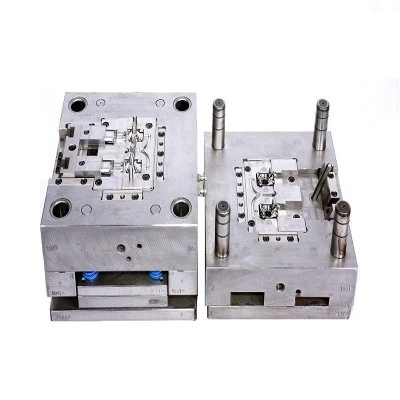
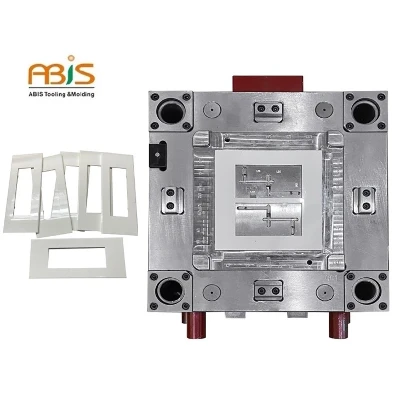
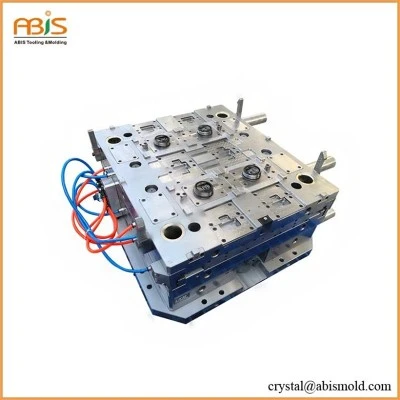
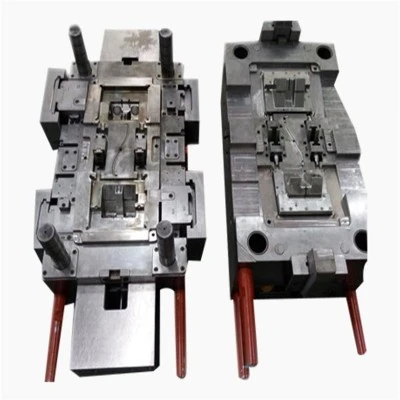
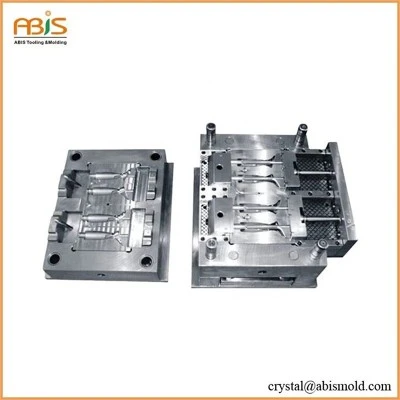
High pressure die casting dies are machined from premium hot-work tool steels - H13 is the industry standard, though some high-volume automotive programs specify H11 or proprietary grades with higher thermal fatigue resistance. A typical die includes the cavity inserts, core pins, slides (for undercuts), ejector plates, cooling circuits, and the runner/gate system that directs metal into the part. The gating layout has an outsized impact on fill pattern and defect distribution, which is why experienced foundries invest heavily in flow simulation software before cutting steel.
Die life varies widely. Zinc dies routinely exceed 1,000,000 shots. Aluminum high pressure die casting tooling lasts anywhere from 80,000 to 200,000 cycles depending on part geometry, thermal loading, and maintenance discipline. Magnesium sits somewhere in between. Over time, the die surface develops heat checking - fine cracks caused by repeated thermal cycling - which eventually transfers texture to the casting surface and requires refurbishment or replacement of cavity inserts.
For engineers working on hpdc die design for a new program, the advice is straightforward: involve the toolmaker from the DFM stage. Decisions about draft angles (typically 1°–3° per side), fillet radii, overflow placement, and venting strategy all get locked in at this point and are expensive to change later. A well-designed high pressure die casting mold with proper conformal cooling will pay for itself through longer die life and lower scrap rates.
Choosing the Right Machine
Machine selection in HPDC comes down to matching clamping tonnage and shot capacity to the part you need to produce. Undersizing a press means flashing or incomplete fill; oversizing it wastes energy and floor space.
A die cast press for small zinc or magnesium connector housings might run 200–400 tons. Mid-size aluminum structural brackets and motor housings typically land on 800–1,600 ton machines. The mega-casting trend in automotive has pushed demand for 6,000+ ton presses, and a handful of foundries now operate 9,000-ton cells for full rear underbody structures. The hpdc machine working cycle on a 1,000-ton cold chamber unit typically runs 45–90 seconds per shot including ladling, injection, solidification, extraction, and die spray - translating to 40–80 parts per hour depending on part complexity.
When evaluating a pressure die casting machine for a new program, look beyond tonnage. Shot speed control, real-time monitoring of cavity pressure, tie-bar stretch sensors for clamping feedback, and integrated vacuum capability all influence part quality and consistency. Newer servo-hydraulic high pressure die casting machines offer tighter control over each injection phase and reduce energy consumption by 30–40% compared to conventional valve-controlled systems.