


Orlando, Fla. — For decades, Bill Duelge says, designers and packaging makers have been trying to figure out how to create a cost-effective, one-piece, blow-molded PET bottle with a handle for mass production.
And now Duelge's company, Practically Impossible Labs of Houston has teamed up with Pretium Packaging LLC to crack the code to bring such a bottle to market.
Pretium CEO Paul Kayser has been with the company for a couple of years and that's just about how long his firm has been working on the latest project.
Dubbed the SureHandle, Pretium currently can blow mold 64-ounce PET bottles with handles from preforms, thanks to technology licensed from Duelge.
Pretium has just announced plans to also create a two-liter version of the bottle, which is attracting lots of interest from consumer product companies.
"Ever since the two-liter Coke bottles had the black plastic caps on the bottom, they've been trying to figure out a way to make these bottles easier to pour, easier to handle, more ergonomic for children, for old people. They've never been able to do it," Duelge said in an interview at the Packaging Conference in Orlando.
"We saw a real market need for convenience and for portability reasons to try to find a way to enhance our preform and bottle portfolio of the business," Kaiser said.
The key, Kayser said, was marrying Pretium's processing know-how with Duelge's technology.
"I think the patent on the handle ran out somewhere between the Stone Age and the Bronze Age, so we're not offering that. What we're offering is the methodology by which we can create this integrated handle," Kayser said.
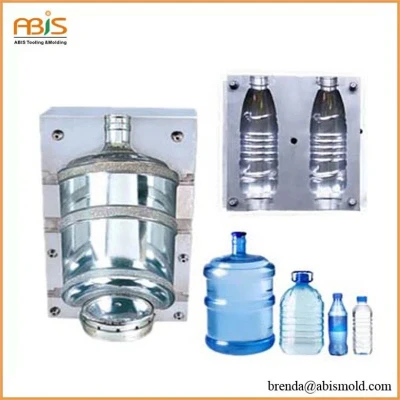
"It's very cost effective and it fits within standard, off-the-shelf equipment. Our manufacturing platform can handle this. It's really just molds and some processing. ... It's a big breakthrough," he said.
Other companies have offered PET bottles with handles through extrusion, but they have been more expensive, according to Pretium. Another way has been to injection mold a handle and then connect it to a blow molded bottle.
The new approach is less expensive, Kayser said, although it is more expensive than a similar PET bottle without a handle.
"I think it's a great package for high-value contents. It's really what it's made for. Obviously, one of the drawbacks is that it uses more material. So it's, inherently, going to be more expensive than the equivalent size container [without a handle]. That's why it's ideally suited for edible oils and honey and specialty beverages and drinks that command a higher premium," Kayser said.
While the bottle itself is more expensive, both Kayser and Duelge said companies should be able to recoup at least some of that difference because the new bottle requires less secondary packaging thanks to a design that's stronger than a typical PET container.
Adding the handle creates a filled package that has more stacking strength for transportation. And retailers could save money because employees have to deal with less secondary packaging.
Duelge said the new bottle creates value because "all the same things are there. It's the same raw material, running on the same machines on the same kinds of processes, just done in a different way. All the basic ingredients are there.
"At the heart of the process is first you have to figure out how to get the handle on the preform and how to injection mold that. There's a great deal, obviously, of technology there. The next thing you have to do is then you have to manage that handle through the stretch blow mold process. The blow molder's side of that is very challenging. You have to mechanically manage that handle," he said.
While the bottle is blow molded, the handle remains solid on a finished container.
Several brands are considering using the new packaging, Chesterfield, Mo.-based Pretium said.