

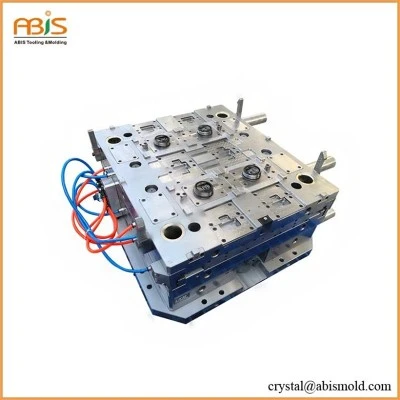
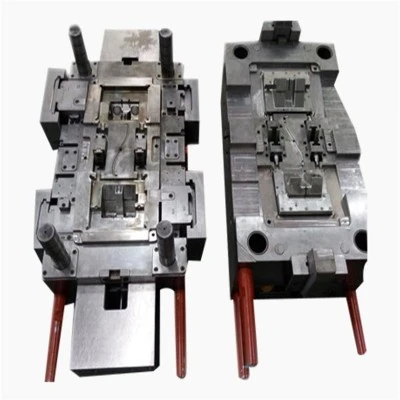
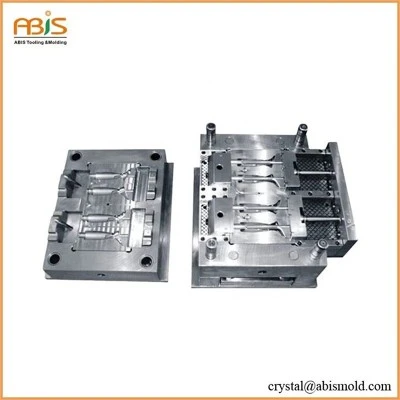
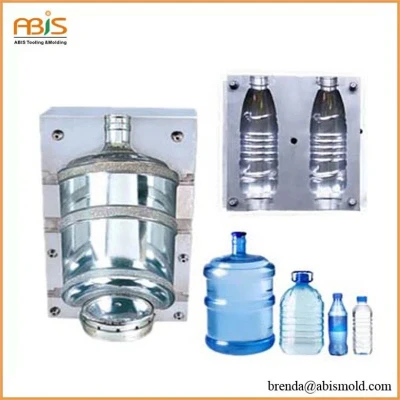



The vast majority of LPPM casting are from aluminum and magnesium, but some are copper alloys. Advantages include very little turbulence when filling the mold because of the constant pressure, which minimizes gas porosity and dross formation. Mechanical properties are about 5% better than gravity permanent mold castings. The disadvantage is that cycles times are longer than gravity permanent mold castings.
Vacuum
Vacuum permanent mold casting retains all of the advantages of LPPM casting, plus the dissolved gases in the molten metal are minimized and molten metal cleanliness is even better. The process can handle thin-walled profiles and gives an excellent surface finish. Mechanical properties are usually 10 to 15% better than gravity permanent mold castings. The process is limited in weight to 0.2 to 5 kg (0.44 to 11.02 lb).
Advantages and disadvantages
The main advantages are the reusable mold, good surface finish, good dimensional accuracy, and high production rates. Typical tolerances are 0.4 mm for the first 25 mm (0.015 in for the first inch) and 0.02 mm for each additional centimeter (0.002 in per in); if the dimension crosses the parting line add an additional 0.25 mm (0.0098 in). Typical surface finishes are 2.5 to 7.5 μm (100–250 μin) RMS. A draft of 2 to 3° is required. Wall thicknesses are limited to 3 to 50 mm (0.12 to 1.97 in). Typical part sizes range from 100 g to 75 kg (several ounces to 150 lb). Other advantages include the ease of inducing directional solidification by changing the mold wall thickness or by heating or cooling portions of the mold. The fast cooling rates created by using a metal mold results in a finer grain structure than sand casting. Retractable metal cores can be used to create undercuts while maintaining a quick action mold.
There are three main disadvantages: high tooling cost, limited to low-melting-point metals, and short mold life. The high tooling costs make this process uneconomical for small production runs. When the process is used to cast steel or iron the mold life is extremely short. For lower melting point metals the mold life is longer but thermal fatigue and erosion usually limit the life to 10,000 to 120,000 cycles. The mold life is dependent on four factors: the mold material, the pouring temperature, the mold temperature, and the mold configuration. Molds made from gray cast iron can be more economical to produce but have short mold lives. On the other hand, molds made from H13 tool steel may have a mold life several times greater. The pouring temperature is dependent on the casting metal, but the higher the pouring temperature the shorter the mold life. A high pouring temperature can also induce shrinkage problems and create longer cycle times. If the mold temperature is too low misruns are produced, but if the mold temperature is too high then the cycle time is prolonged and mold erosion is increased. Large differences in section thickness in the mold or casting can decrease mold life as well.