








Process conditions are the important factors that affect the performance of injection parts
Injection molding determines not only the shape of the finished product, but also its material properties.
(1) insufficient understanding of the importance of form
The overall configuration of the plastic part determines the terminal performance in each case.This means that it is not only the external performance of plastic parts under the condition of technology, but also the internal performance.This also means that thermal mechanical treatment of the formed compound, as defined by the pressure, temperature, and shear rate during processing, determines the material structure of the plastic parts produced.
The external and internal performance of the product determines the final performance of the product.Therefore, the shape of plastic controls the shrinkage and shape of plastic parts, and also determines the performance of materials.The performance of plastic parts is not necessarily the best performance for a certain shape of plastic parts, such as high mechanical strength, ideal hardness, good wear resistance.In turn, the ideal shape will inevitably produce a stable shape, but also a shape that cannot be changed again.Once the relationship between process and final quality is established, a fact becomes clear: quality plastics can be obtained only through the process control in a certain optimized form of injection molding, which focuses on form and includes the recording and control of state variables.Therefore, stable process control needs to be adapted to the processed plastics.Based on the thermodynamic factors, the crystallization kinetics must also be considered for semi-crystalline thermoplastic.
(2) research on processing POM
In this paper, the influence of process conditions on the final performance of the plastic parts during the injection molding process is studied and discussed by taking the fluidity copolymerized formaldehyde (POM) as an example.
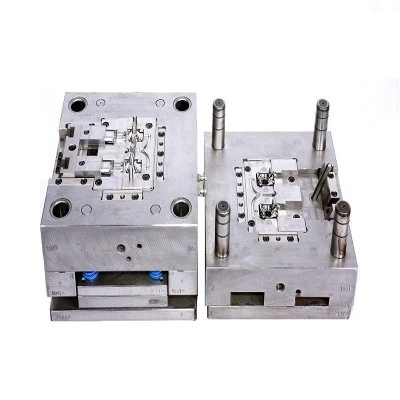
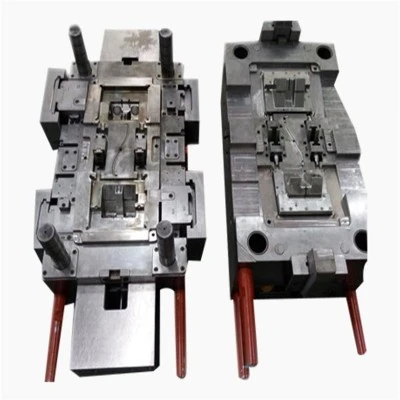
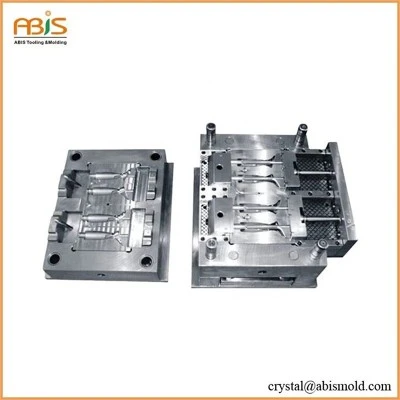
For this study, a 5A stretch sample (cross-sectional area 4 x 1mm2) was made in the two-cavity mold at different injection speeds and pressures, according to DIN/ISO 527 standard.The mold cavity is filled through a pin gate located on the side of the part's flanks.The mold is equipped with a pressure sensor near the gate to measure the pressure change at the center shoulder of the tensile sample.In all tests, plastic parts production mold temperatures was set at 95 ℃, because this is recommended for high quality plastic raw materials manufacturer of temperature.The compound was processed on an injection molding machine with a clamping force of 220kN.Screw is 18 mm in diameter, the machine nozzle temperature is 210 ℃.
On the one hand, the research results reveal the clear relationship between the internal and external performance of the plastic parts, and on the other hand reveal the relationship with the selected process conditions.Although the plastic parts produced have almost the same mechanical strength, but the deformation capacity of different sample material structure has obvious difference.This is clearly seen from the different tensile strains at the break, especially the different tensile impact strength obtained in each case.The infusion rate was normalized to 20cm3/s, and the tensile impact strength was reduced by 55%, while the measured weight and shrinkage change was only 2.5% or 15%.
(3) the necessity of material oriented quality management
Supplementary studies on different samples by dynamic thermal difference (DSC) only highlight the initial morphological differences.In other words, taken together, the samples studied had uniform crystals.The results were also observed during cooling (crystallization heat) and during secondary heating (melting heat after the pre-homogenous process).
From the crystallization process of dynamic differential heat measurement, it can be clearly seen that, when the injection speed in the polymer processing increases step by step, the crystallization heat at lower temperature increases from -74j /g to -97j /g.This implies that the POM material used will change due to processing reasons.The variation of the molecular weight and molecular weight distribution of the material improves the non-similar solidification performance (the overall crystallization is more or less consistent), thus promoting the formation of different structures (forms), which is proved by the ratio of peak height to peak width, from 2.7 to 1.6.
In this case, only DSC (first step heating) is used to observe the overall crystallization of different samples, leading to an incorrect assessment of quality, as no difference is obvious here.This highlights the differences that exist only if the structure is evaluated on an indirect basis.
The thin section (about 10mm) of different samples was observed under polarized emission light, showing that the structure of the plastic parts made by different process conditions was very different.As the injection rate increased, the thickness of the non-spherical outer layer observed decreased dramatically from 102mm to 30mm, while the remaining structure also experienced changes (figure 2).Therefore, the sharp decrease in the hardness of the plastic parts produced under high injection speed is also attributed to the unideal shape change of materials.
(4) effect of processing on rheological properties
The processing of POM with easy flow at different injection speeds obviously has a profound influence on the rheological properties of materials.The increase of the shear degree of the polymer leads to the gradual chain decomposition of the micro molecules, which is accompanied by changes in the fluidity of the melt (pressure transfer in the mold) and further changes in the crystallization kinetics.The DSC curves that have been measured and discussed represent the processes that are going on.The rheological survey also confirmed this performance.The rheometer used is UDS200 model.Take a sample of 100 mg of rheological meter under 210 ℃ temperature, 0.1-100 - s - 1 within the scope of logarithmic increasing shear rate, thickness of 0.1 mm.
These results demonstrated that the decomposition of the polymer in the process increased as the injection rate increased.The average molecular weight of the polymer varies according to the processing conditions, as can be clearly seen from the decrease in zero viscosity as the injection rate increases.
The results show that different injection speeds have significant effects on the final quality of POM injection molded parts.The rheological property of the plastic parts varies with shear and plays an important role in the process of POM melt.This change is due to a decrease in molar mass and an adjustment in molecular weight allocation, as demonstrated by experimental data.With the melt cooling down during the forming process of the plastic parts, the rheological properties of POM melt were determined together with the actual melt temperature and melt pressure.This means that completely different structures and highly varying performance can vary with processing conditions.
For the easy-to-flow copolymerized formaldehyde, the brittle is obvious, it will reduce the impact strength of the thin-walled plastic up to 50%.The results of this study are basically consistent with what has been observed in practice.The phenomenon discussed is less common to the fluidity of polyformaldehyde.
So if do not consider the form, it is impossible to make a clear description of the quality of plastic parts.Therefore, the production process of plastics with the latest technology requires a certain form of quality management. It first monitors the quality of the internal performance of the plastic parts (such as monitoring the pressure curve of the mold cavity), so it ensures that the products obtained are of high quality on the whole.
Therefore, in order to achieve preventive quality management, it is desirable and indeed necessary to apply material-centric process monitoring and subsequent process control in the future.In this way, it is possible to greatly avoid the potential damage to the plastic parts caused by inadequate service performance caused by processing operations.The definition of ideal structure will ensure the production of extremely thin wall or extremely small plastic parts to achieve the ultimate stability of the plastic parts.