








1 Establish a three-dimensional model of plastic products;
2 According to the designed product, the draft analysis and the design of the parting surface are carried out;
3 Establish the project, load the product, and create the calling mold base; 4 Design the guidance system, pouring system, ejector mechanism, runners and cooling and other auxiliary parts.
The modules involved in the workflow are described below.
1 Part Design, Generative Shape Design: These two modules are mainly used to complete the establishment of three-dimensional model, of which Part Design is a part design module, Generative Shape Design is a Generative Shape Design module.
2 Core & Cavity Design: This module is used to build the parting surface, cavity surface, core surface and define the main opening direction and slider direction, ie the core cavity design module.
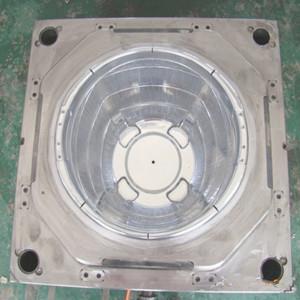
3 Mold Tooling Design: This module is used to call the mold base, design guide system, gating system, ejector mechanism, runners and cooling and other auxiliary parts, that is, the mold design module in this book in accordance with the progressive approach, from the core cavity design, Subdivision surface design, mold rack design, component design, injection mold solid modeling to three-dimensional graphics to two-dimensional graphics conversion, through a detailed example to explain the various functions, enabling beginners to be able to carry out injection molds in a short time 3D design. In order to facilitate readers to learn and master various functions, specific operating examples are used in each chapter. The operation steps and operating skills are introduced in detail for difficult operations, which will make the reader more comfortable when using CATIA.