


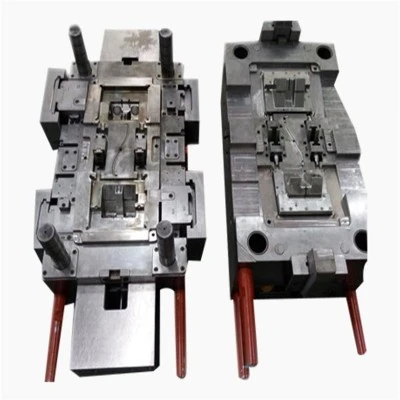
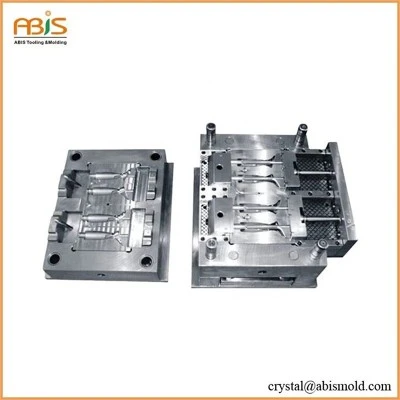

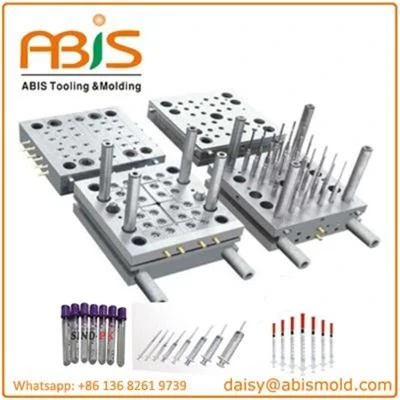
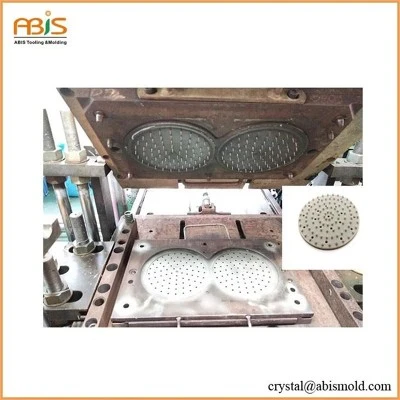


According to the moulding type , the mould have six variety
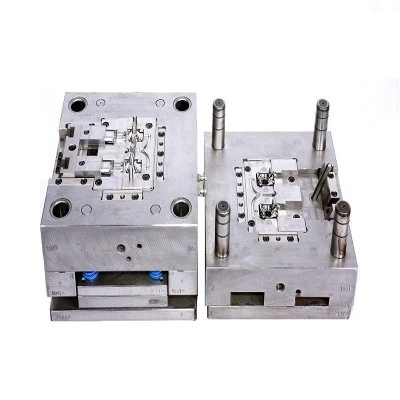
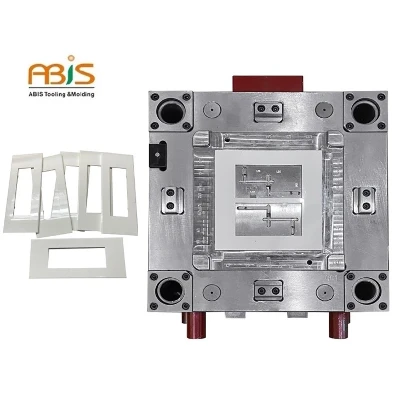
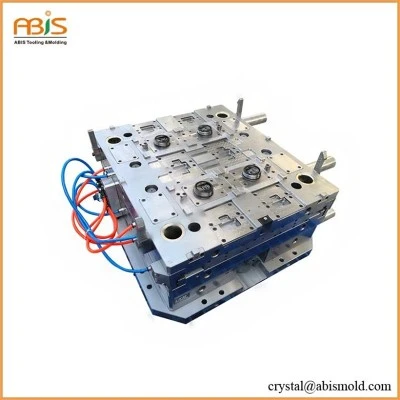
(1) injection molding
Was added to the injection machine put plastic heating cylinder, the molten plastic is heated, the injection machine screw or plunger, driven by the nozzle and mould gating system into the mold cavity, due to the physics and chemistry hardening shape become injection molding products.Injection molding is composed of injection, pressure-maintaining (cooling) and plasticizing process, so the injection molding is characterized by periodicity.Thermoplastic injection molding molding cycle is short, high efficiency, wear small to mold, melting can bulk forming complex shape, surface design and legible, high dimensional accuracy of parts;However, it is difficult to avoid forming defects for the plastic parts with large wall thickness changes.Each anisotropy of the plastic parts is also a quality problem. All possible measures should be adopted to minimize it.
(2) compression molding
Commonly known as pressing molding, is one of the earliest methods of molding plastic parts.Compression molding is to insert plastic directly into an open mold cavity with a certain temperature, then close the mold, and the plastic melt into a flowing state under the action of heat and pressure.As a result of physical and chemical action, the plastic hardened into a plastic part with a certain shape and size.Compression molding is mainly used for thermosetting plastic molding, such as phenolic molding powder, urea formaldehyde and melamine formaldehyde moulding powder, glass fiber reinforced phenolics, epoxy resin, DAP resin, silicone resin, polyimide, such as mold plastic, can also processing unsaturated polyester material group (DMC), sheet molding compound (SMC), prefabricated unit mold plastic (BMC), etc.In general, the compression mold can be divided into three types: overflow type, non-overflow type and semi-overflow type.
(3) extrusion molding
Is made in the viscous flow state of plastic, under high temperature and pressure, through a specific profile is the mouth of the mould, and then at low temperatures, finalize the design become continuous profile of the cross section shape of a molding method.Extrusion molding production process, is to prepare molding materials, extrusion molding, cooling finalizing, traction and cutting, extrusion aftertreatment (tempering or heat treatment).In the process of extrusion molding, adjust the temperature of each heating section of the extruder cylinder, the temperature of the die, screw rotation, traction speed and other technological parameters to get the qualified extruded sections.Special attention should be paid to adjusting the rate of extrusion of polymer melt from the die.Because when the melt extrusion rate is low, the extruder has a smooth surface and uniform section shape;However, when the extrusion rate of molten material reaches a certain limit, the surface of the extruder will become coarse and lose luster, and the appearance of shark skin, orange peel and shape distortion will occur.When the extrusion rate increases further, the surface of the extruder is distorted, even fragmented and fractured into molten fragments or columns.Therefore, the control of extrusion rate is very important.
(4) injection molding
Also known as casting pressure molding.Is to add plastic raw materials to preheat the indoor feeding, and then put pressure column in the charging chamber lock mould, through pressure column pressure on plastic, plastic melt under high temperature and high pressure as the flow state, and through pouring system into the cavity gradually solidified into plastic parts.This form of molding, also known as transfer molding.The injection molding is suitable for the plastics that are lower than the solid plastic, which can be compressed and molded in principle.However, when the molding material is lower than the curing temperature, the molten state has good fluidity, and at higher than the curing temperature, there is a large curing rate.
(5) hollow molding
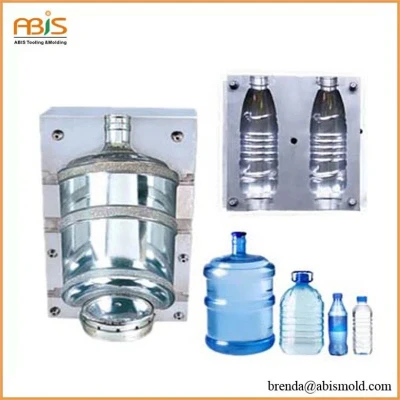
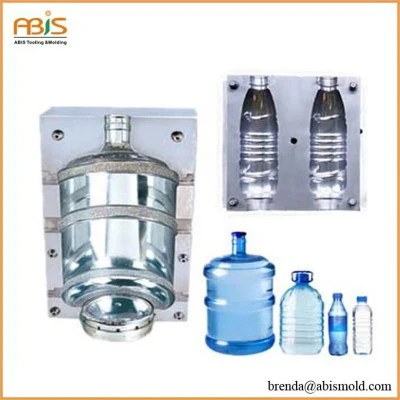
Is brought by extrusion or injection system, is still in a state of plasticizing tubular or flake PiCai trend fixed in molding, immediately into the compressed air, forcing PiCai expansion and post them on the mold cavity wall, after waiting for cooling to finalize the design, mold release, a quick needed a processing method of hollow products.It is suitable for high pressure polyethylene, low pressure polyethylene, hard polyvinyl chloride, polystyrene, polypropylene, polycarbonate and so on.According to the different forming methods, hollow molding is mainly divided into extrusion blow molding and injection blow molding.The advantages of extrusion blow molding are simple structure of extruder and extrusion blow mold. The disadvantage is that the wall thickness of the blank is not consistent, and the wall thickness of the plastic products is not uniform.The right figure is a schematic diagram of extrusion blow molding.Injection blowing plastic hollow molding has the advantage of parison wall thickness, no flash, because the injected slab bottom, so won't produce spell and seam on the bottom of the hollow products, not only beautiful and high strength.The disadvantage is that the used molding equipment and the mold price are expensive, so this kind of forming method is mainly used in the mass production of small hollow products, and there is no extrusion blow molding method in use.
(6) die casting mould.
Die casting mold is also known as transfer molding tool.To add plastic raw materials to preheat the loading chamber, and then to the pressure on the pressure column, plastic melt under high temperature and high pressure, and through the mould gating system into the cavity, it hardens forming, the forming method called die-casting molding, the mold die casting molding.This kind of mould is used in the molding of thermosetting plastic.
In addition, there are foam plastic moulds, glass fiber reinforced plastic low-pressure molding molds and so on.